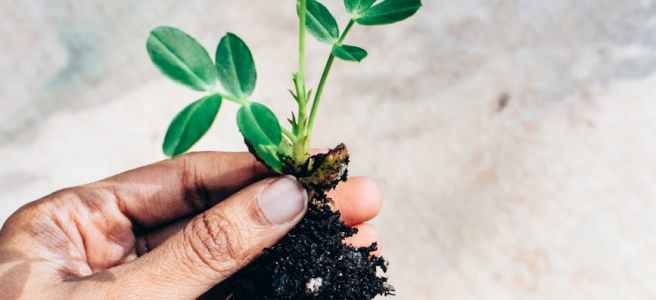
How fragile is my relationship with God or rather my faith?
Today I was reading about plants. I asked Google, “What happens to a 40-year-old plant?” I thought that if I could understand how plants grow, maybe I could understand something about my own spiritual state of existence.
The article said ‘plants at forty years old are considered mature. They flower. They bear fruit.’
That was far more positive than I expected.
Honestly, I expected to read something closer to the way I feel: they’re ready to die; they ought to be cut down, a 40 year old plant is pretty much useless—leggy, hardened, dried up and barren like a woman in menapause.
I had considered bringing my deadest, driest, most wilted potted plant with me when I go see the pastor for counsel next week. Just set it on his desk. I have no other words for how I feel.
The article about plants was encouraging, but also discouraging. I don’t feel like I’m flowering. I certainly don’t feel like I’m bearing fruit. So does that mean I need to be pruned? A hard pruning, the kind the article said sometimes has to happen?
The pastor said something this morning that frightened me. He said “we can come to God through surrender, or we can come to Him through suffering—but He will call His people.”
Or something along those lines.
That scared me to death.
Do I need to be pruned? And does pruning translate into suffering? Of course it does—at least in the church world.
I read, one way plants are pruned is by pinching off the very top bud—the ‘apical’ bud, I think it was called. When that bud is removed, the plant redirects its energy to the lower buds instead of sending everything upward to that one dominant point. As long as the top bud remains, all the nutrients go there, as if it’s the little king of the plant. Remove the king, and the whole kingdom gets fed.
My dad once told me something like that.
Unfortunately, I didn’t quite remember which part was which—apical, auxiliary, axis, whatever it was—so I just started pinching everything off.
Why was I not surprised when I got exactly one tomato that year?
Another thing I read, roots are the little straws that gather most of the nutrients, they grow by searching—stretching through the soil for water and minerals to suck up.
I feel like the root.
Like I’ve spent the majority of my life in the dark, not flowering and beautiful, but searching and stretching downward, looking for the living water of the Word of God; never having the privilege of sunlight or fruit weighing down my branches.
But Doesn’t that count for something – searching for God’s word like water in the depths of the earth.
Doesn’t that make me well established? Could I really be so easily uprooted? Could I really just wilt after all that? Like Eli or Saul, rejected after a few barren seasons, like that fig tree Jesus cursed?
Is my faith so fragile that one dry season would do me in?
Another question: am I my own gardener, or is God my gardener?
If I’m my own gardener, then I’m responsible for my growth. But if God is the gardener, why am I so worried? He waters. And sometimes He doesn’t water—so the roots stretch deeper, either way it’s his wisdom and knowledge that makes those decisions not his ignorance.
Plants don’t decide to grow. They don’t sit around contemplating whether they should seek water and potassium from the soil. It’s instinctive. Automatic. Like blinking. Like a beating heart. God designed us to move towards life.
God made plants that way.
God made us that way too.
So do I really have to worry that my faith doesn’t look like someone else’s?
How many varieties of plants and vegetation grow on this planet?
Does a maple sapling spend its time worrying that it doesn’t look like a rose? Or tiny roots worry that they aren’t Luscious branches?
If God truly is the gardener, then maybe I don’t have to worry so much. He’s the one tending the conditions that make me grow. And growth isn’t just water and fertilizer. Sometimes it’s the absence of water. Sometimes it’s drought.
That’s when the roots stretch downward. That’s when they grow longer and stronger. Ironically the things that sometimes make us feel like we’re falling apart are really making us stronger ,not more fragile.
We are not responsible for making ourselves grow.
We are not responsible for making sure we look like everyone else.
We are not responsible for keeping pace with someone else’s season of faith.
and most of all we are not responsible for keeping ourselves alive.
faith is not fragile; because faith in christ is rooted in christ and HE is not fragile!
Maybe the question isn’t whether my faith is fragile. Of course the answer to that would be no—at least not if the roots run deep. The real question is whether I trust the One tending it?
Parts of my life may not look like the pastor’s life, or like the life of a young Christian just beginning their christian journey. But that doesn’t mean I have to feel threatened by fragility or constantly question my faith.
Instead, I can pause and honor the faithfulness of God in the many seasons he has seen me through. a faithful God does not produce fragile people or plants!
________________________________________
But they will be like a tree planted by the water…
It does not fear when heat comes;
its leaves are always green.
It has no worries in a year of drought
and never fails to bear fruit. | Jeremiah 17:8
_______________________________________

 My Faith Place