Perhaps my children and family members don’t understand my need to write.
When we argue, I send long text threads — pages of information, systematic logic, emotion carefully laid out in paragraphs. When my son was pledging a fraternity, I texted him daily with my fears and concerns.
One day he replied,
“Mom, it’s overwhelming and stressing me out. I don’t read the texts. Stop please.”
Now when I start typing, he just calls.
I am, admittedly, a weirdly prolific writer. I have dozens of journals, essays, manuscripts, articles, posts — hundreds of pieces compiled over the years. Writing is how I process. It’s how I think. In some cases how I learn and how I regulate myself. It’s not like that for everyone else.
Its only been since I understood this idea of Neurodiverse thinking and functioning that it has made sense to me that writing and other diversities is the way I exist in the world. when I think about myself in terms of neurodiverse it is oddly freeing and it makes me sort of proud rather than ashamed of being odd.
Discovering the Language of Neurodivergence
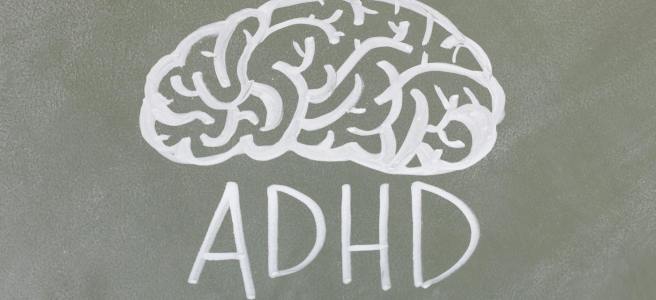
Recently, I began learning more about neurodivergence and its connection to ADHD. Neurodivergence (ND) is not the same thing as ADHD. It’s a broader concept — a term that describes brains that function or process information differently from what is considered “typical.”
ADHD is one specific neurodevelopmental condition under that umbrella. If neurodivergence is fruit, ADHD is an apple.
Other conditions often included under the neurodiversity umbrella are Autism (ASD), Dyslexia, Tourette Syndrome, OCD, Sensory Processing Disorder (SPD), and even Schizophrenia, among others.
According to the Cleveland Clinic, neurodiversity refers to the idea that differences in brain function are normal variations of the human experience. ADHD, along with autism and dyslexia, is considered part of that spectrum of neurological difference.
That shift matters.
It reframes the conversation from what’s wrong with you?
to
how is your brain designed?
Neurodivergent thinkers are often described as:
- Deeply focused — or unable to focus unless something truly captures them
- Highly sensitive to noise, light, textures, or emotional intensity
- Prone to sensory overload
- In need of movement to regulate
- Drawn to niche or specialized interests
When we’re interested, we’re all in.
I obsess on research, words, structure, organization bringing order from chaos. I analyze arguments. I arrange and rearrange them. I lay them out in careful sequence. I build scaffolding around ideas. I see how pieces fit together. I plan -I perfect. My strengths are extensive and so are my weaknesses.
Directions overwhelm me. I struggle to process them and often teach myself instead through doing. I have difficulty taking orders. Relationships can be challenging for me. And intimacy almost impossible. Casual questions about myself can leave me blank. I overthink. I hoard. I second-guess myself. I feel hyper-responsible. I live with anxiety and depression. Humor doesn’t always land the way it does for others.
My memory is inconsistent — some details I recall vividly, others disappear completely. Inconsistency unsettles me, so I cling to structure. When plans change unexpectedly, I feel panicked. I look for order to stabilize myself.
Speaking in real time — reading facial expressions, tracking tone, responding quickly — can be overwhelming.
I prepare beforehand. I navigate carefully in the moment. Then I replay the entire interaction afterward to determine whether I handled it “correctly.” Writing removes that pressure.
It gives me space. Time. Structure. It allows me to think without the hard work of decoding.
People are an incredible amount of work for me. I prepare in advance. I navigate in the moment. Then I replay the entire interaction afterward in exhausting detail to determine whether I handled it “correctly.”
Strengths, Not Just Struggles
One of the most refreshing aspects of the neurodiversity framework is its emphasis on strengths.
Someone with dyslexia may struggle with conventional reading, yet often demonstrates strong spatial reasoning and 3D visualization — strengths that lend themselves to engineering, design, architecture, and the arts.
The same can be true of ADHD. While attention regulation can be difficult, creativity, intuition, pattern recognition, and hyperfocus can be extraordinary assets.
Even brilliant thinkers like Albert Einstein are often retrospectively described as neurodivergent in their cognitive style — deeply focused, unconventional, structurally imaginative.
The idea isn’t to deny challenges and differences, but to understand them.
To play to strengths rather than forcing conformity to a single acceptable operating system.
Historically, we’ve expected children and adults to think and function in one narrow way. And when someone doesn’t, it can feel threatening to systems that depend on predictability.
But difference is not danger, It may, in fact, be design.
There is no single right way to think, communicate, organize, create, or process emotion.
There are many kinds of minds.
And perhaps what some of us have labeled as “too intense,” “too analytical,” “too emotional,” or “too verbose” is simply a brain trying to build order in the way it knows how.
My advice to you if you are neurodivergent, find what works for your operating system and don’t apologize for it!
Reference:
Neurodivergent
Medically Reviewed.Last updated on 06/02/2022.
Cleveland Clinic

 My Faith Place