In Luke 18, Jesus tells a series of short parables centered on prayer. Together, they form a striking contrast between those who ask for help and those who rely on themselves.
- A widow begs for justice.
- A religious man thanks God for his righteousness
- A sinner pleads for mercy.
- A rich man asks how to enter eternal life.
- A blind beggar asks to see.
The widow, the sinner, and the blind beggar receive what they ask for. The religious man and the rich man walk away—unjustified and sad.
Luke tells us plainly why Jesus shares these stories: “He told them a parable to the effect that they ought always to pray and not lose heart.” There’s no hidden meaning here. God wants us to pray, to ask, and not to give up.
But there is something deeper happening.
God seems to respond not to strength and independence, but to humility and need. Those who are self-assured are sent away, while those who know they are desperate are defended and healed. At first glance, it might seem that God favors the poor, the blind, the sinful, and the broken. But perhaps the point is not that God wants us to be that way—only that we already are. The difference is whether we recognize it.
The widow, the sinner, and the beggar all focus on what they need and cannot provide for themselves. The Pharisee and the rich man focus on what they can do.
“What must I do to inherit eternal life?”
“Thank you, God, that I am not like this sinner…”
Jesus has already said, “I did not come for the healthy, but for the sick.” In other words, if your posture is self-sufficiency, you don’t think you need Him—and if you don’t think you need Him, He cannot help you.
It’s like a child with a stuck zipper. When a child says, “Can you help me?” I help immediately. When a child says, “I can do it myself,” and pushes me away, I let them struggle.
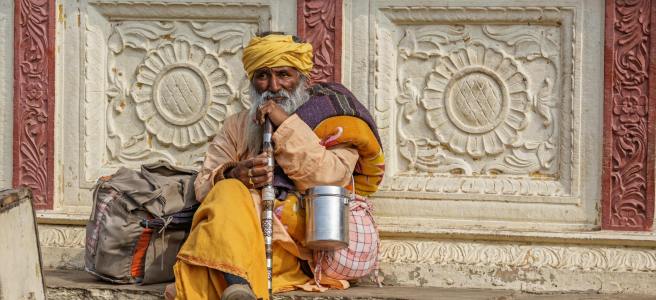
Consider the blind man in the first century—blindness meant a lifetime of begging, isolation, and poverty. Or the widow—her husband was her security, protection, provision, and honor. To lose him was to lose everything. And the sinner—confessing sin before God is the ultimate act of humility: I cannot save myself. I cannot fix this. I deserve judgment. These are the cries of the humble. Their circumstances forced them to the end of themselves.
Jesus begins the widow’s parable with a simple instruction: “They ought to pray and not lose heart.” Is this a command, an encouragement, or a promise that “God will bring about justice for His elect”?
Recently, standing at my kitchen sink, discouraged over a situation at work that felt deeply unjust, I realized something: it wasn’t prayer that first lifted my heart—it was the promise of justice. Knowing that God sees, knows, and will act gave me strength to pray.
Injustice accumulates over time. It hardens us. The worst part isn’t being wronged—it’s doing what is right and being treated as if you did the opposite. You show up early, stay late, go the extra mile, and still hear, “meets expectations.” You clean the kitchen faithfully, and someone says you never help. Over time, frustration turns into cynicism, then despair. It begins to feel like you can’t win—do right and be overlooked, do wrong and be punished.
This is where the widow’s cry becomes our own. Repeated injustice leaves us feeling helpless, unprotected, and exposed. And eventually we find ourselves begging: God, give me justice. I can’t defend myself. I can’t fix this.
That helplessness humbles us. It turns us into blind beggars.
No—Jesus doesn’t want us blind. He wants us to see ourselves accurately. And sometimes it takes blindness, poverty, hunger, or loss to help us see. But we are not meant to stay there. Do not lose heart. Ask. Go to the One who can help.
Jesus is telling us not to let injustice harden us, but humble us—bringing us to the end of ourselves, where we finally turn to God. When it comes to injustice, the only real hope we have is an outside source. True fairness and defense do not come from within our power.
So Jesus says: let God be that source.
God will bring about justice. He will not delay. The question is not whether He has the power or the mercy—but whether we have the faith to wait. Life often feels unfair. Sometimes it truly is. When there is nothing left to do, we cry, beg, plead, and persist in prayer.
The power was never in our hands to fix injustice.
Just don’t lose heart.
Compiled written and edited by Kim blenkhorn
Some Editing with the use of CHatGBT

 My Faith Place