I think most of us are drawn to what resonates with our own lives—what helps us, moves us, encourages us, or asks something of us today. That isn’t evil; it’s human. And not everything human is evil. We gravitate toward what we can relate to. That’s why Scripture can sometimes sound like Charlie Brown’s teacher—noise without meaning. Priestly robes, stone temples, sacrifices, vineyards… it all feels foreign. Where do I fit in these parables while sitting at a desk job Jesus never imagined?
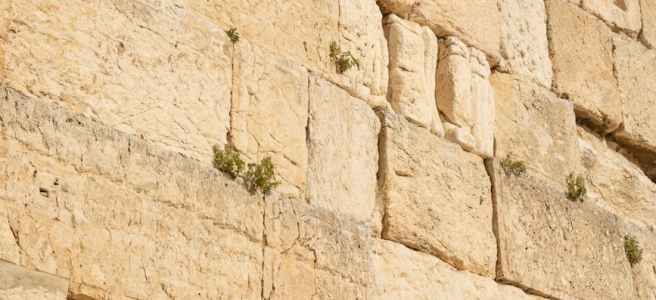
Even the most devoted believer drifts sometimes, spacing out during another devotion or commentary. The biblical world feels distant because it is distant—2,500 years and thousands of miles away. Jesus spoke to a real audience in real time. He answered their questions, told stories drawn from their daily lives, and gave them truth they could live out that very night. When Jesus speaks of the stones crying out or the stone the builders rejected…the people understood what he meant he taught from the temple. They were standing in the midst of a courtyard surrounded by stones. But I am reading this in the comfort of my living room, windows plaster paint paper wood doors…no stones.
So where does that leave me?
For centuries, people have tried to pin the “end times” to current events. I wonder if Jesus was speaking, at least in part, about the fall of Jerusalem in 70 AD. The signs He warned about have echoed again and again through history. So how do I read Scripture and walk away truly changed? Maybe truth was never meant to be something I master—but something that enters me.
Still, I scroll endlessly through sermons, books, podcasts, articles. I’m numb to the abundance. Strangely, I feel more alive writing about God than reading about Him. So how does God still get my attention?
Pain.
Pain transcends time, culture, and history. We all understand it. Pain strips us—like sandpaper—of our illusion of control, our false strength, our hardened hearts. It removes the barrier between our callousness and our tenderness. Loss, illness, suffering, death—these wear us down until we’re raw enough to feel again. Suddenly we’re alert, like a new recruit in training, finally ready to receive truth. We become receptive when we’re hurting.
Jesus looked at the temple and said, “Not one stone will be left on another.” That got their attention. Will it get mine? Kim not one dollar will be left…what are my stones. Clearly the stones in the temple were grand beautiful more even more they were the hub of religious life the place the presence of God met with the people, it was the heartbeat of the jewish people. And now Jesus is threatening its very existence. He wept over Jerusalem, seeing what was coming—bodies piled at the altar, people burned alive, trampled, starved, enslaved. The city of peace did not recognize the things that made for peace. Why? because they were still looking to the stones to make the peace. They were still hard , like those stones unable to see they needed to be crushed to be made new.
And today? Destruction still gets our attention. Ruin. Unwanted change. When our walls crack, we become desperate for truth.
So I ask myself: what are my stones? What walls am I trusting that will fall if I don’t recognize my visitation? Where does my security really lie—pride, beauty, money, even church? If I believe these things will save me, I may one day find myself cornered, staring destruction in the face, as Jesus promised either the stone falls on you, or you fall on the stone.
Suddenly, Jesus’ words feel painfully relevant.
What He wanted first-century Jews—and what He wants me—to understand is this: a better temple is here. A stronger wall. A rejected cornerstone made of flesh and truth. A savior whose name is Jesus. If I recognize my visitation, I’ll abandon every false refuge and cling only to Christ. I don’t have to fight, defend myself, or save myself—and neither did they, but they didn’t recognize the true refuge, they were trying to hold up in a sanctuary made from literal stones. Stones that could burn and fall and be crushed.
The temple of the living God was never made with hands.
My salvation isn’t a place I visit or a structure that can crumble. To bring it closer to my everyday life: it isn’t the church, or wealth, or my job, or my talents, or even my health. I can barricade myself inside these things, but they will not save me—a lesson the Jewish rebels learned the hard way.
While Jesus tried to warn them, I have the opportunity to learn from both Him and them. I believe He was telling them plainly that He was the living temple, the cornerstone, the place where God dwelled among them. But perhaps, like us, they were dull and hardened, unable to receive it because they couldn’t yet relate to it.
Think about that for a moment.
Many who heard Jesus say these things were already gone by the time the temple was attacked and burned. Even so, He connected Himself to those stones. Even so, He warned them of what was coming. And even so, had they been more sensitive to His words, they might have survived.
So how will I respond to truths I cannot yet fully relate to?

 My Faith Place